.avif)



.avif)


.webp)


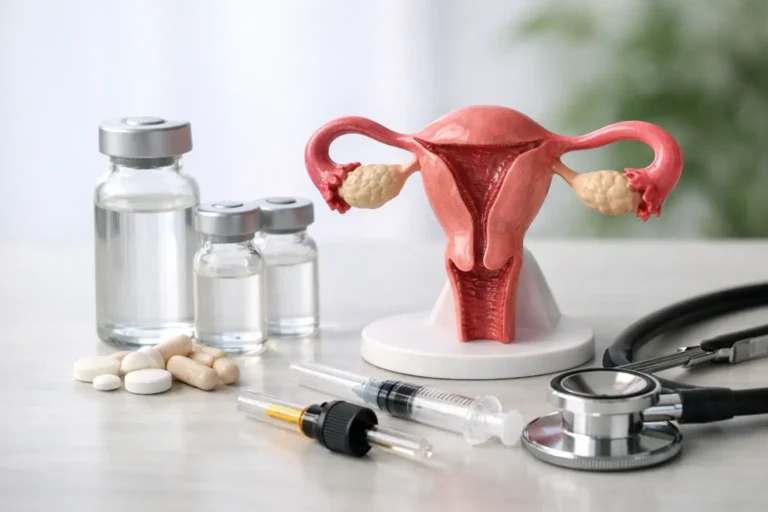
Hormone replacement therapy (HRT) for men, commonly called testosterone replacement therapy (TRT), is a medical treatment that restores testosterone to healthy levels in men diagnosed with hypogonadism. TRT can improve energy, sex drive, muscle strength, bone density, and mood, but it requires careful medical supervision and regular blood work to manage potential side effects. According to the National Institutes of Health, approximately 40% of American men over age 45 have low testosterone levels that could benefit from evaluation. This blog covers what testosterone does, why levels drop, how TRT works, the types of treatment available, what results to expect, and how to decide if hormone therapy is right for you.
Hormone replacement therapy for men is a medical treatment that supplements the body with testosterone when the testicles no longer produce enough on their own. The condition behind that drop is called hypogonadism, a dysfunction where the testicles or the pituitary gland that controls them fails to maintain adequate testosterone production. Doctors confirm hypogonadism through blood tests, not symptoms alone. The American Urological Association (AUA) defines low testosterone as a total serum level below 300 nanograms per deciliter (ng/dL) on two separate morning fasting blood draws.
Testosterone replacement therapy raises that number back into a healthy range, typically between 450 and 600 ng/dL per AUA guidelines. The therapy comes in several forms, including injections, topical gels, patches, and oral compounds. Each form delivers testosterone into the bloodstream at a controlled rate. We use a naturopathic medicine approach to identify the root cause of low testosterone before starting any treatment, because low testosterone is often a symptom of a deeper issue rather than the issue itself.
It is important to note that TRT is designed for men with clinically confirmed low testosterone, not for men whose levels fall within the normal range. The Cleveland Clinic reports that testosterone naturally declines at a rate of roughly 1% per year after age 30. That gradual decline is part of normal aging. TRT addresses cases where the decline is steeper, happens earlier, or produces symptoms that reduce quality of life.
Testosterone regulates muscle mass, bone density, red blood cell production, fat distribution, sex drive, sperm production, and mood in men. The testicles produce roughly 95% of a man's testosterone through specialized cells called Leydig cells. The remaining 5% comes from the adrenal glands. Testosterone acts on androgen receptors throughout the body, which is why its effects reach so many different systems.
Muscle tissue relies on testosterone for protein synthesis and repair. A 2025 systematic review published in Cureus confirmed that testosterone promotes muscle hypertrophy by binding to androgen receptors in muscle cells, enhancing both growth and recovery. Bone tissue depends on testosterone for mineral density maintenance. Men with low testosterone face higher fracture risk because their bones lose the hormonal signal that triggers calcium absorption and new bone formation.
Red blood cell production responds directly to testosterone levels. Low testosterone reduces erythropoietin output from the kidneys, which slows red blood cell production and can lead to anemia. Fat distribution shifts when testosterone drops. Men with low testosterone tend to accumulate visceral fat around the midsection, and that visceral fat contains the enzyme aromatase, which converts testosterone to estrogen. The conversion creates a cycle where low testosterone produces more fat, and more fat produces even lower testosterone. Men struggling with unexplained weight changes may benefit from evaluation for hormonal imbalance.
Sexual function depends on testosterone for libido, spontaneous erections, and sperm production. Cognitive function also responds to testosterone levels. Research from the Testosterone Trials (TTrials), a coordinated set of seven placebo-controlled studies in 788 men published in the New England Journal of Medicine, found that men with low testosterone reported better mood and lower severity of depressive symptoms after testosterone treatment. Men experiencing persistent chronic fatigue alongside mood changes should consider having their hormone levels checked.
Low testosterone in men is caused by hypogonadism, which results from problems with the testicles (primary hypogonadism), the pituitary gland or hypothalamus (secondary hypogonadism), or a combination of both. Primary hypogonadism occurs when the testicles themselves cannot produce enough testosterone, even when the brain sends the correct hormonal signals. Causes include Klinefelter syndrome, undescended testicles, testicular injury, mumps orchitis, and cancer treatments like chemotherapy or radiation.
Secondary hypogonadism occurs when the hypothalamus or pituitary gland fails to send adequate luteinizing hormone (LH) and follicle-stimulating hormone (FSH) to the testicles. Causes include pituitary tumors, inflammatory diseases, obesity, opioid medications, and high-dose corticosteroid use. The Endocrine Society reports that 30% to 50% of men with Type 2 diabetes or obesity have hypogonadism, making metabolic health one of the strongest predictors of testosterone status.
Beyond diagnosable disease, several lifestyle and environmental factors accelerate testosterone decline beyond the expected 1% per year rate:
For men in the Bingham Farms, Michigan area, we use advanced diagnostics to screen for environmental toxin exposure, nutrient deficiencies, and thyroid dysfunction before attributing low testosterone to aging alone.
Multiple longitudinal studies have also found that average testosterone levels across male populations have been declining since the 1980s, even after adjusting for age and body mass index. The cause of this generational decline remains under investigation, but environmental chemical exposure, rising obesity rates, and changes in physical activity levels are the leading hypotheses.
Low testosterone is diagnosed through two separate morning fasting blood tests that both show total testosterone below 300 ng/dL, combined with at least one symptom consistent with testosterone deficiency. The AUA's 2018 guidelines require both criteria. A single low reading is not sufficient because testosterone fluctuates throughout the day, peaking in the early morning and dropping by afternoon. Blood draws must happen before 10:00 AM to capture the most accurate reading.
Total testosterone measures all testosterone in the blood, including testosterone bound to sex hormone-binding globulin (SHBG) and albumin. Free testosterone measures only the unbound fraction that cells can actually use. Some men have total testosterone within the normal range but low free testosterone due to elevated SHBG, which can increase with age, liver disease, or thyroid dysfunction. A complete diagnostic panel also includes LH and FSH levels to distinguish between primary and secondary hypogonadism, prolactin to rule out pituitary tumors, and thyroid hormones to exclude thyroid-related fatigue and weight gain.
We also evaluate hematocrit, prostate-specific antigen (PSA), estradiol, liver enzymes, and metabolic markers before starting any personalized hormone protocols. This comprehensive baseline allows us to monitor changes accurately once treatment begins. The Endocrine Society recommends using a testosterone threshold of 264 ng/dL, while the AUA uses 300 ng/dL. Both organizations agree that symptoms must be present alongside the lab findings for a clinical diagnosis.
Most men who need TRT are diagnosed between ages 40 and 65, though testosterone deficiency can occur at any age. The prevalence of biochemical hypogonadism increases with each decade of life. Data from the Baltimore Longitudinal Study of Aging shows that roughly 12% of men in their 50s have low testosterone, rising to approximately 49% of men in their 80s. The American Academy of Family Physicians (AAFP) published similar findings in 2024, reporting global prevalence of testosterone deficiency ranging from 10% to 40%, with a sharp increase after age 45.
The concept of andropause describes the gradual hormonal shift that men experience as testosterone declines with age. Andropause differs from female menopause because the decline is gradual rather than sudden. Not every man with declining testosterone develops symptoms severe enough to warrant treatment. Symptoms that commonly prompt evaluation include persistent fatigue that does not improve with rest, reduced libido, erectile difficulty, loss of muscle mass despite regular exercise, unexplained weight gain, brain fog, and depressed mood.
A growing number of younger men are also seeking evaluation. Data from a 2024 study published in PLoS One found that testosterone therapy prevalence more than doubled among men aged 24 and under between 2018 and 2022. Among men aged 25 to 34, prevalence increased by 86% during the same period. The increase likely reflects greater awareness of low testosterone symptoms, expanded access to testing, and the generational decline in baseline testosterone levels documented across multiple cohorts.
The benefits of testosterone replacement therapy include improved sexual function, increased energy, better mood, greater muscle mass, stronger bones, and improved body composition. The magnitude of each benefit depends on the severity of the deficiency, the delivery method used, and how consistently the patient follows the treatment plan.
Sexual function shows the earliest and most consistent response. The TRAVERSE Sexual Function Study, the largest randomized placebo-controlled trial on TRT and sexual outcomes, found that testosterone therapy significantly improved overall sexual activity, sexual desire, and hypogonadal symptoms over 12 months of treatment. A 2017 meta-analysis published in European Urology found that testosterone therapy significantly improved erectile function scores (mean IIEF-EFD improvement of 2.31 points versus placebo, p<0.0001) across 14 placebo-controlled trials enrolling 2,298 men.
Body composition improves measurably within the first three to six months. A 2006 meta-analysis published in Clinical Endocrinology found that men on TRT gained an average of 1.6 kilograms of lean body mass and lost an average of 1.6 kilograms of fat mass within the first three months. Men pursuing weight management alongside TRT typically see better results because testosterone enhances basal metabolic rate and shifts the body toward fat oxidation.
Bone density responds to testosterone therapy over a longer timeline. The TTrials Bone Trial found that 12 months of testosterone therapy increased spinal volumetric bone mineral density by 6.7% and estimated spinal trabecular bone strength by 8.4% compared to placebo. An 18-month study published in the Journal of Clinical Endocrinology and Metabolism found that spinal bone mineral density increased by 5% and trabecular bone density increased by 14% in men with acquired hypogonadism receiving testosterone therapy.
Mood and cognitive function improve for many men, particularly those with moderate to severe deficiency. The TTrials reported that testosterone-treated men experienced slightly better mood and lower depressive symptom severity compared to placebo. Energy improvements are commonly reported but have been less consistent in clinical trial data, likely because fatigue has many causes beyond testosterone alone.
The types of testosterone therapy available for men include intramuscular injections, topical gels, transdermal patches, oral and sublingual compounds, and subcutaneous pellets. Each method delivers testosterone into the bloodstream through a different absorption pathway, and the right choice depends on the patient's lifestyle, symptom severity, and preference for dosing frequency.
Delivery MethodFrequencyAbsorptionKey ConsiderationsIntramuscular InjectionsEvery 1-2 weeksDirect into muscle tissueProduces peaks and troughs in testosterone levels between doses; most cost-effective optionTopical GelDaily applicationThrough skin into bloodstreamSteady hormone levels; requires avoiding skin contact with others until gel driesTransdermal PatchDaily applicationThrough skin via adhesive patchConsistent delivery; may cause skin irritation at application siteOral/SublingualDaily or twice dailyThrough oral or sublingual mucosaConvenient; newer formulations reduce liver metabolism concerns of older oral versionsSubcutaneous PelletsEvery 3-6 monthsSlow release from pellet under skinLong-acting; difficult to adjust dose once implanted
Data from the TRAVERSE trial, which enrolled 5,246 men and used daily transdermal 1.62% testosterone gel, demonstrated that topical delivery maintains steady testosterone levels and is associated with the cardiovascular safety profile published in the New England Journal of Medicine in 2023. The AAFP's 2024 review of TRT for male hypogonadism confirms that intramuscular injections remain the most widely prescribed form due to lower cost and reliable absorption.
We offer creams, capsules, troches, and injections at our practice. We do not recommend pellet implants because of the difficulty in adjusting dosage once the pellet is placed. The ability to titrate dosing based on follow-up lab results is critical for optimizing outcomes and minimizing side effects. Each patient's protocol is selected based on their diagnostic results, lifestyle factors, and treatment goals. Bioidentical hormone therapy uses plant-derived compounds that are molecularly identical to the testosterone the body produces naturally.
After 3 months of TRT, most men experience improved energy, more stable mood, increased libido, early muscle gains, and reduced body fat. Results follow a predictable timeline based on which body systems respond to testosterone first. Understanding this timeline helps set realistic expectations and prevents men from abandoning treatment too early.
At the 3-month mark, your provider should order follow-up blood work to check total and free testosterone, hematocrit, PSA, estradiol, and liver enzymes. These results determine whether dosing adjustments are needed. Peptide therapy can complement TRT for men looking to support recovery, sleep, and overall cellular function alongside hormone optimization.
Yes, hormone replacement therapy is safe for men with confirmed hypogonadism when prescribed by a qualified provider and monitored through regular blood work. The most significant evidence supporting TRT safety comes from the TRAVERSE trial, the largest cardiovascular safety trial ever conducted on testosterone therapy. Published in the New England Journal of Medicine in 2023, the study enrolled 5,246 men aged 45 to 80 with hypogonadism and preexisting or high risk of cardiovascular disease. The primary finding was that testosterone therapy did not increase major adverse cardiovascular events compared to placebo (hazard ratio 0.96, 95% confidence interval 0.78 to 1.17).
A 2025 position statement from the European Expert Panel for Testosterone Research confirmed these findings, stating that testosterone therapy does not significantly increase the risk of major adverse cardiovascular events when prescribed to appropriately selected patients and monitored regularly. The Androgen Society's position paper published in Mayo Clinic Proceedings in 2024 reviewed all three large randomized controlled trials and found that none reported greater rates of cardiovascular events in the testosterone treatment groups compared to placebo.
TRT does carry potential side effects that require monitoring. Common side effects include acne, oily skin, fluid retention, and increased red blood cell production (polycythemia). Polycythemia raises hematocrit levels, which increases blood viscosity and clot risk. Regular hematocrit monitoring, typically every 3 to 6 months, catches this early. The TRAVERSE trial did report higher incidence of atrial fibrillation and pulmonary embolism in the testosterone group, which is why ongoing cardiovascular monitoring matters. Prostate-specific antigen (PSA) levels should be checked at baseline and during follow-up to screen for prostate changes. Men interested in the relationship between hormone therapy and cancer risk can find more information in our related blog.
Yes, testosterone therapy can affect fertility by suppressing sperm production. Exogenous testosterone sends a signal to the hypothalamus and pituitary gland that enough testosterone is circulating, which causes the brain to reduce or stop producing LH and FSH. Sperm production depends on high local concentrations of testosterone inside the testicles, which are maintained by LH stimulation of Leydig cells. When LH drops, intratesticular testosterone drops with it, and sperm production decreases or stops entirely.
The suppression is usually reversible after discontinuing TRT, but recovery time varies. Some men recover sperm production within a few months; others may take a year or longer. The AUA guidelines specifically warn against prescribing testosterone to men who are actively trying to conceive. For men who need testosterone therapy but also want to preserve fertility, alternatives like clomiphene citrate (an oral medication that stimulates LH production) or human chorionic gonadotropin (hCG, which mimics LH) can raise testosterone levels without suppressing sperm production.
We discuss fertility goals with every male patient before starting any hormone protocol. Men in their 20s and 30s who present with low testosterone deserve a thorough investigation into secondary causes before committing to lifelong TRT, because many of those causes are reversible through lifestyle changes, nutritional optimization, and treatment of underlying conditions.
The difference between bioidentical and synthetic testosterone is molecular structure. Bioidentical testosterone is chemically identical to the testosterone the human body produces, while synthetic hormones have altered molecular structures. Bioidentical testosterone is derived from plant sources, typically soy or yams, and then processed in a laboratory to match the exact molecular formula of human testosterone (C19H28O2). The body recognizes and metabolizes bioidentical testosterone through the same enzymatic pathways it uses for its own natural testosterone.
Several FDA-approved testosterone products are bioidentical, including testosterone cypionate (injectable), testosterone enanthate (injectable), and topical testosterone gels. Compounded bioidentical formulations are prepared by specialty pharmacies to custom specifications, allowing for precise dosing in creams, troches, or capsules. Hormone therapy for women follows the same bioidentical principle for estrogen and progesterone.
The distinction matters because molecular structure determines how a hormone interacts with receptor sites and how the liver metabolizes it. Bioidentical testosterone binds to androgen receptors with the same affinity and duration as endogenous testosterone. We use bioidentical formulations exclusively at our practice because they integrate naturally with the body's existing hormonal pathways. Our approach pairs hormone optimization with root-cause testing through our Biointelligent Testing protocol, which evaluates over 500 lab markers to identify the factors driving hormonal decline.
No, testosterone therapy is not recommended for men whose testosterone decline is caused by normal aging alone without clinical symptoms or levels below 300 ng/dL. Both the AUA and the Endocrine Society explicitly state that treating normal age-related testosterone decline with TRT is not supported by current evidence. The Mayo Clinic's published guidance reinforces this position, noting that the health benefits of testosterone therapy for age-related decline remain unclear.
The distinction between normal aging and hypogonadism is critical. A man in his 50s with a total testosterone of 380 ng/dL and no symptoms does not meet the diagnostic criteria for TRT. A man of the same age with a total testosterone of 240 ng/dL and symptoms of fatigue, low libido, and loss of muscle mass does meet the criteria. The diagnosis requires both biochemical confirmation and symptomatic presentation.
For men who do not qualify for TRT but want to support healthy testosterone levels, both the Endocrine Society and AUA recommend lifestyle modifications as a first-line approach. Resistance exercise increases testosterone acutely and supports lean body mass, which reduces aromatase conversion. Weight loss, particularly reduction of visceral fat, has been shown to increase testosterone levels independently of any medical intervention. Sleep optimization, stress management, and correction of nutrient deficiencies (vitamin D, zinc, and magnesium are the most commonly implicated) all support natural testosterone production. Men in the greater Detroit area who want a comprehensive evaluation of their hormonal health alongside nutrition and lifestyle guidance can schedule a consultation to explore root-cause options before considering hormone therapy.
Hormone replacement therapy is worth it for men who have clinically confirmed low testosterone (below 300 ng/dL on two morning tests) combined with symptoms like fatigue, low sex drive, or loss of muscle mass. The TTrials and TRAVERSE studies both demonstrated measurable improvements in sexual function, mood, and body composition. Men whose testosterone decline is caused by normal aging without significant symptoms are less likely to see benefits that outweigh the commitment of ongoing therapy and monitoring.
Most men who start testosterone therapy for confirmed hypogonadism continue treatment long-term, often for years or indefinitely, because the underlying condition that caused low testosterone typically does not resolve on its own. Stopping TRT causes testosterone levels to return to their pre-treatment baseline, and symptoms usually return. Regular follow-up blood work every 6 to 12 months helps confirm that the therapy remains safe and effective.
TRT does not age your face when testosterone levels are maintained within the normal physiological range. Some men report changes in skin texture, including increased oiliness or mild acne, particularly in the first few months. These changes reflect increased sebaceous gland activity from higher testosterone and typically stabilize over time. There is no clinical evidence that TRT at therapeutic doses accelerates facial aging.
Belly fat reduction on TRT typically becomes noticeable between 3 and 6 months after starting treatment. A meta-analysis published in Clinical Endocrinology found an average fat mass reduction of 1.6 kilograms within the first three months. Testosterone increases basal metabolic rate and improves insulin sensitivity, both of which shift the body away from fat storage. Combining TRT with resistance exercise and a structured nutrition plan accelerates fat loss significantly.
The first signs of testosterone working are increased energy, improved sleep quality, and heightened libido. These changes typically appear within the first 2 to 4 weeks of treatment. Sexual desire improvements begin around week 3 and plateau near week 6, based on data from the TTrials. Mood stabilization and improved mental clarity often follow within 4 to 8 weeks. Visible body composition changes take longer, usually appearing around the 3-month mark.
Testosterone therapy begins working within the first few weeks, but full results develop over 6 to 12 months. Libido and energy respond fastest (2-4 weeks). Mood and cognitive clarity improve within 4-8 weeks. Muscle mass and fat loss become measurable at 3-6 months. Bone density improvements require 6-12 months of consistent therapy. The TRAVERSE trial used a mean treatment duration of 21.7 months to assess both efficacy and safety outcomes.
Hormone replacement therapy for men is a well-studied treatment that can restore energy, sexual function, muscle strength, bone density, and mood in men with confirmed low testosterone. The key is accurate diagnosis through proper blood work, selecting the right delivery method, and committing to regular monitoring that catches side effects early. The TRAVERSE trial's cardiovascular safety data, published in the New England Journal of Medicine, has resolved the largest historical concern about TRT and reinforced that the therapy is safe when prescribed appropriately.
Not every man with declining testosterone needs medical treatment. Lifestyle changes like resistance exercise, weight loss, sleep optimization, and stress reduction can support healthy testosterone levels naturally. For men whose levels have dropped below the clinical threshold and whose symptoms are affecting daily life, TRT offers a path back to feeling like themselves. At Cutler Integrative Medicine, we take a root-cause approach to every hormone evaluation, identifying environmental, nutritional, and metabolic factors that conventional testing often misses. If you are experiencing symptoms of low testosterone, call us at (248) 663-0165 to schedule a comprehensive evaluation.


.png)




.avif)
Cutler Integrative Medicine blends naturopathic and conventional care to treat the root causes of illness. Through personalized wellness plans, advanced diagnostics, and holistic therapies.
.avif)
.avif)
Copyright © 2025 Cutler Integrative Medicine. All Rights Reserved.
.avif)



.png)


.avif)
.avif)

.avif)
